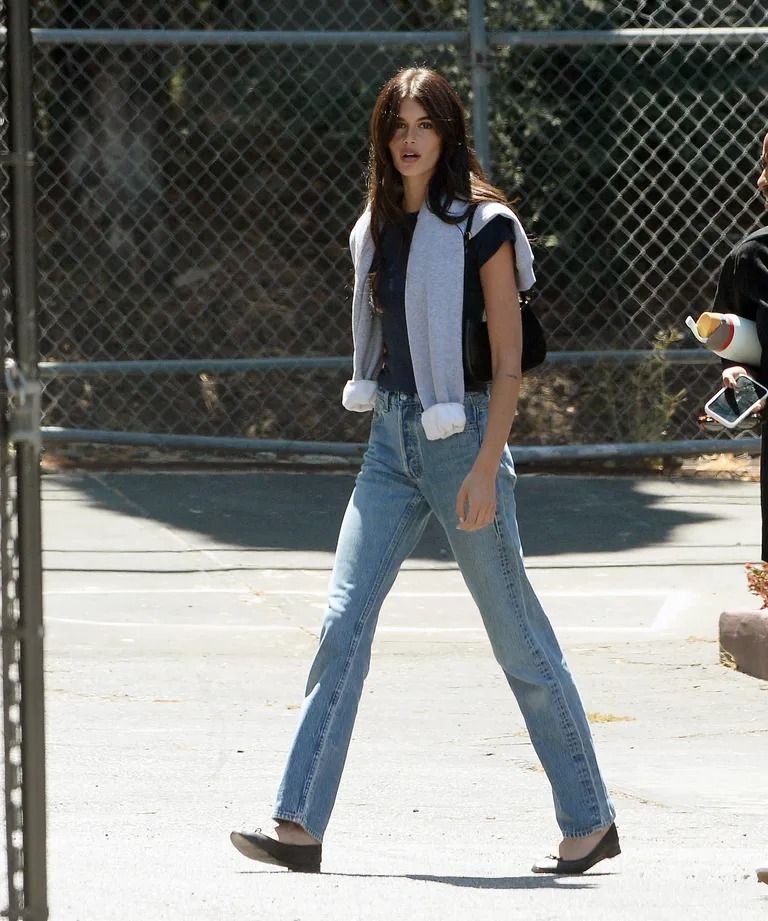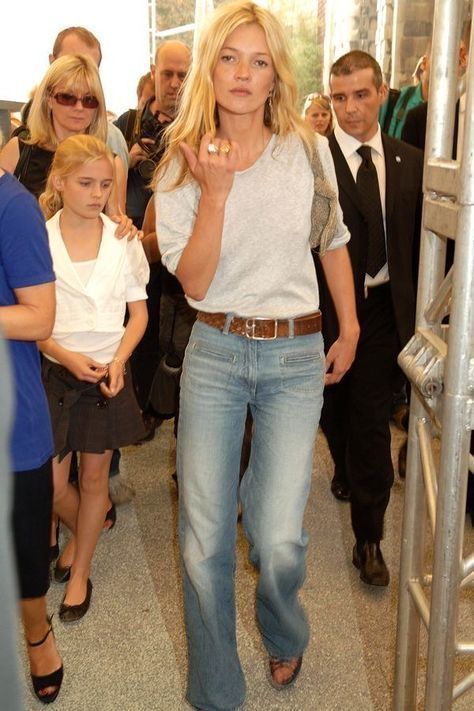
Every era produces outfits. Only a few produce a system.
The 90s street style look, especially the version worn off-duty by models, musicians, and the well-dressed underpaid, has been referenced so constantly for three decades that it's become invisible. You've seen it a thousand times. You could probably sketch it from memory. Most recreations still miss the point because they focus on the individual pieces instead of the structural logic that holds them together. If you want the meaning layer after the mechanics, Off-Duty Model Style picks up why this same formula still reads as status, privacy, and control.
The white tank, the leather jacket, the pair of Levi's 501s, none of these carry the look on their own. What matters is the way garments are assigned specific roles in an outfit and balanced with enough discipline that the result reads as careless.
The mechanism lives in the pull between structure and nonchalance. It still runs underneath almost every outfit that reads as genuinely cool today.
1. The Anchor Layer
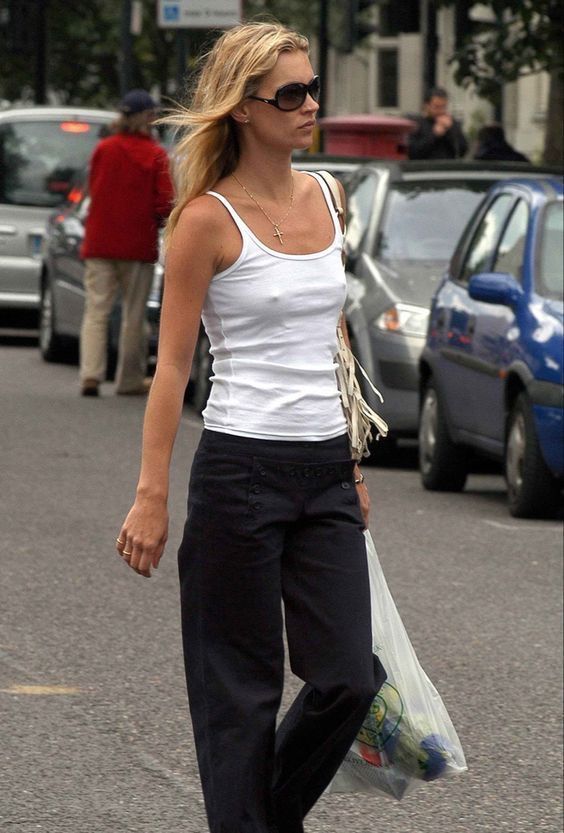
Every version of this look starts with a basic that sits close to the body and does almost nothing on its own. A white crew-neck tee. A ribbed tank. A slim black knit. A grey marl t-shirt one wash away from being thrown out.
The anchor layer's job is negative space. It establishes the body's line without competing with anything else in the outfit. It's what you see in the gap where a jacket falls open. It's the thing that makes the rest of the outfit legible.
Without a clean anchor, the outfit has no resting point. Every element starts fighting for attention, and the result looks assembled, which is the opposite of what the look is supposed to communicate.
Kate Moss in a white tank and dark trousers is enough to prove the point. The base layer does very little. That is exactly why it works.
2. The Structure Piece
This is the element that gives the outfit its silhouette from across a room. A leather jacket. A blazer. An oversized denim jacket. A long trench. Sometimes a worn-in bomber with the right proportions.
The structure piece does more than deal with weather. It's architectural. It defines whether the outfit reads as sharp, slouchy, commanding, or soft. If you removed it and hung it on a chair, you would still be able to identify the mood of the outfit from its shape.
The governing rule of 90s street style, the single most important silhouette principle, is that the structure piece and the anchor layer should be in opposition. If the anchor is slim, the structure piece is relaxed. If the anchor has volume, the structure piece tightens up.
This tension creates the ease that makes the look feel unstudied. Two fitted layers feel tight. Two oversized layers feel vague. One of each feels like someone who understands proportion instinctively.
3. The Denim Element
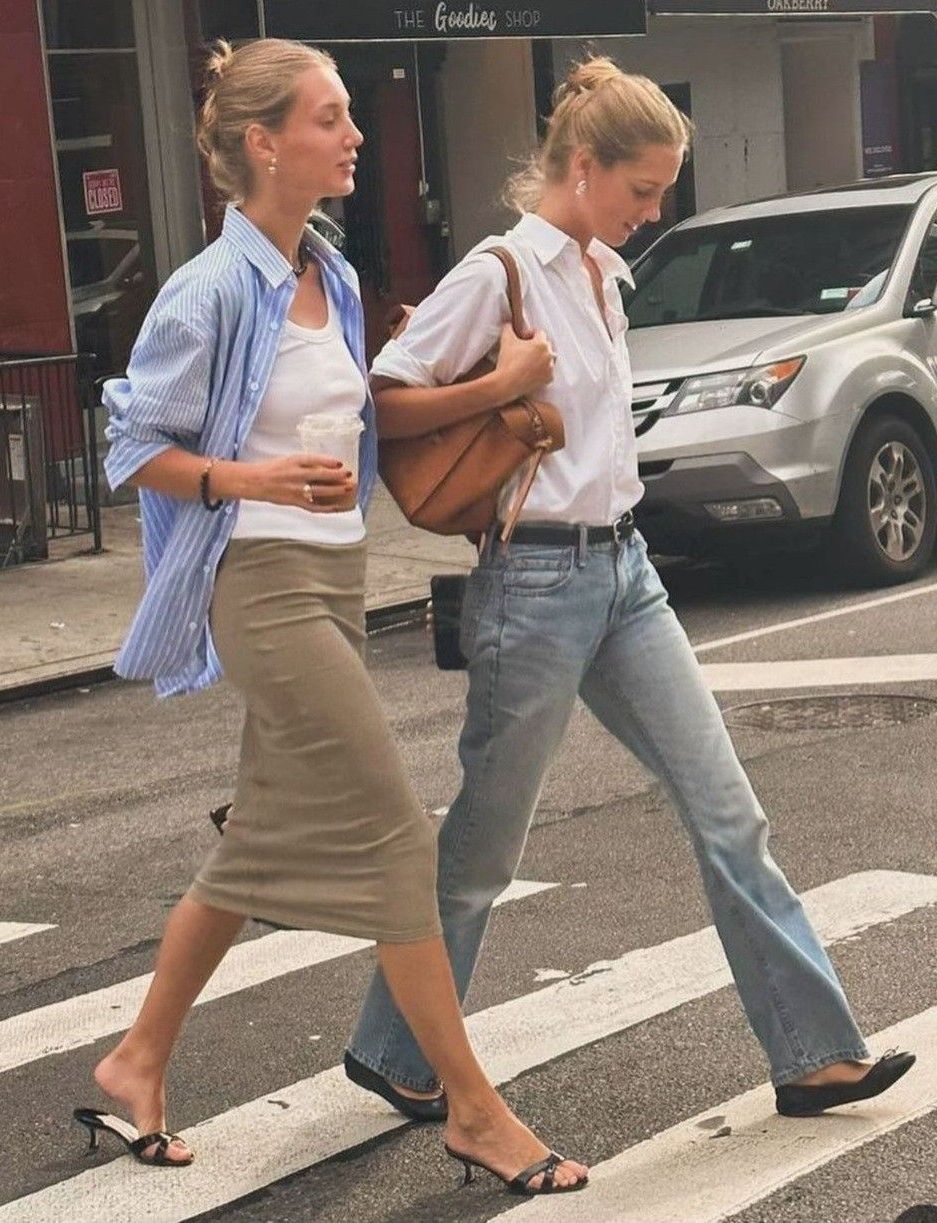
Denim is the connective tissue of the entire system. It works because it solves a specific design problem. The anchor layer and the structure piece establish a mood, but they need something on the bottom half that neutralizes itself almost completely.
Something that reads as neither dressy nor athletic. Something that accepts any shoe. Something that weathers into a personal shape over time instead of looking new and deliberate.
Denim does all of this. The look defaulted to jeans so reliably because denim is the most invisible lower half in western dressing. It removes a decision from the outfit and lets everything above the waist carry the character.
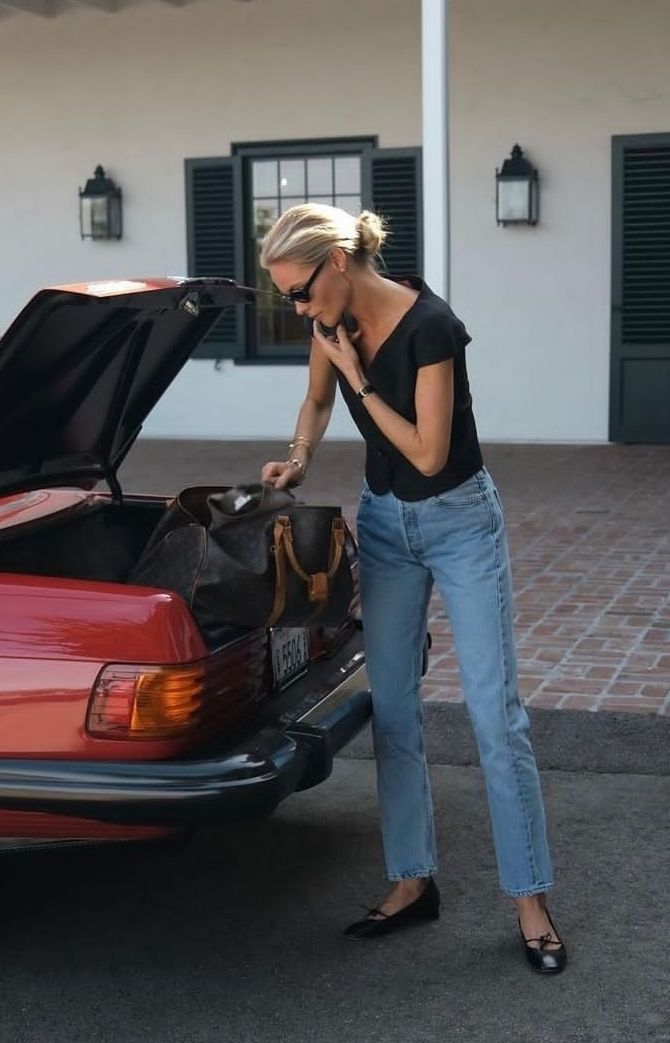
The fit is the only thing that matters. In the 90s framework, jeans sit in one of two corridors: straight-through and slightly relaxed, or slim and high-waisted with a clean line. The moment the denim starts carrying its own design details, it stops being connective tissue and starts competing.
4. The One Good Accessory
This is the element most people either skip or overdo. The 90s street style uniform almost always included exactly one accessory that signaled intention, proof that the outfit was not actually accidental, even if everything else suggested it was.
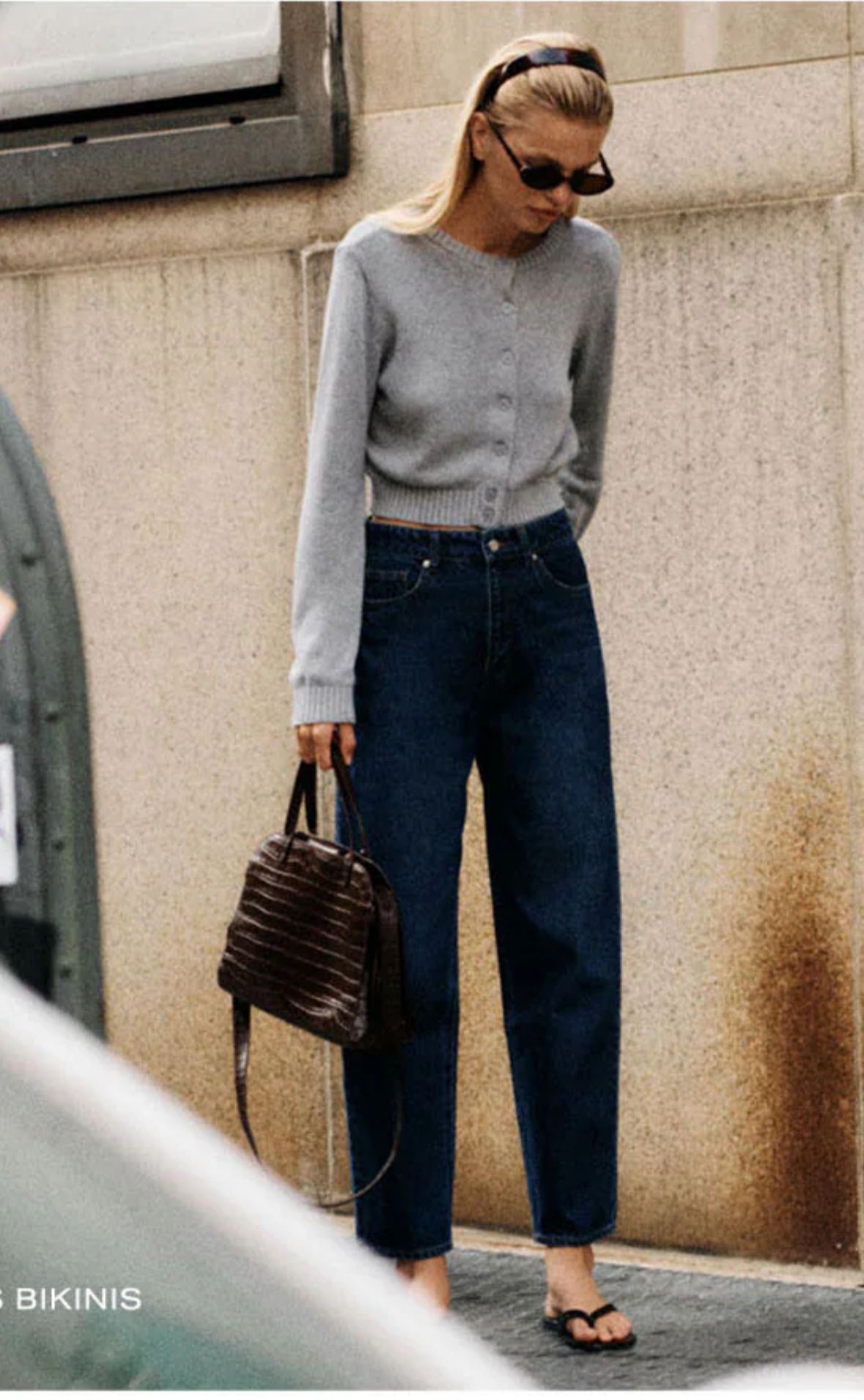
A pair of sunglasses with a strong frame. A good belt with a visible buckle. One bag that looked like it cost something, carried carelessly. A fine gold chain at the neck. A watch that did not read sporty.
The restraint is the point. One accessory reads like a decision. Two can still work. Three starts to look like you were trying to make an outfit happen, and the whole illusion collapses.
Carolyn Bessette-Kennedy understood this instinctively. A clean outfit with dark sunglasses or one exact bag can carry more force than a pile of styling details ever will.
5. The Shoe That Grounds It
The shoe tells you whether the person actually lives in this outfit or put it on for a photo.
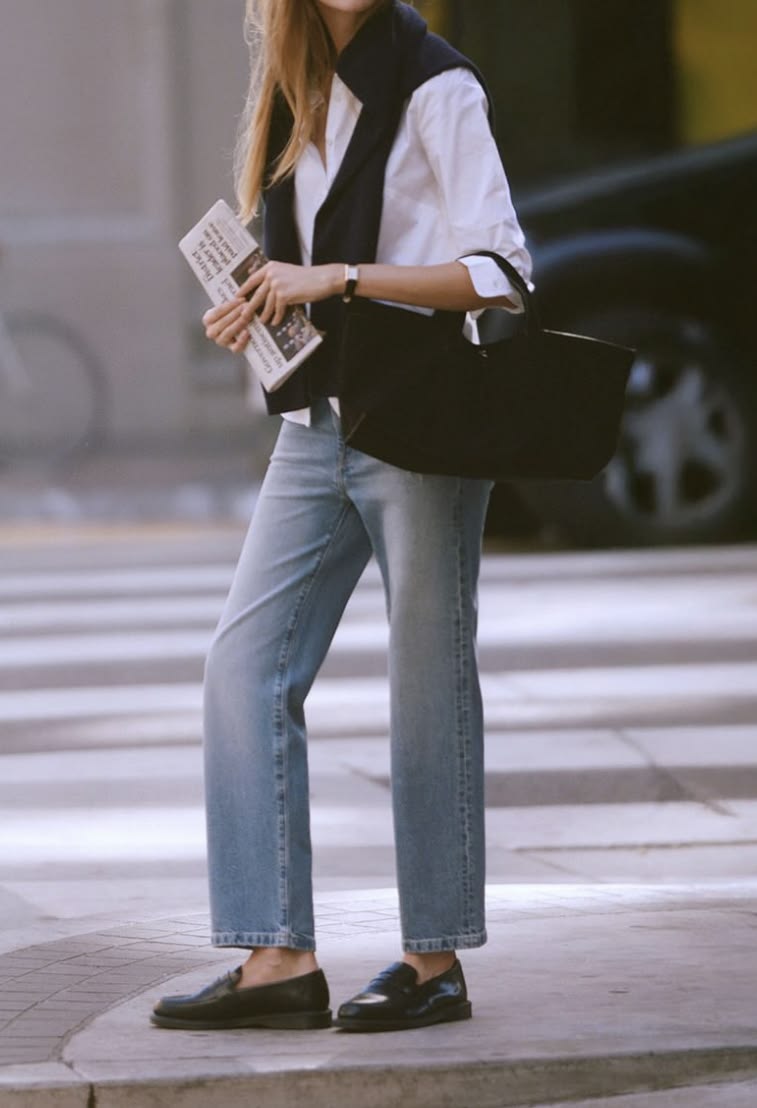
In the 90s street style formula, the shoe is almost always low, flat or near-flat, and slightly beaten. Black loafers. White sneakers that are not new. Simple black shoes that look like they belong to someone who walks through their life rather than posing in it.
The outfit reads as off-duty because the shoe reads as walked in. The moment the shoe is too clean, too tall, or too going-out coded, it reframes everything above it as a deliberate fashion choice and weakens the whole premise.
What Makes It Off-Duty Instead of Just Casual
The distinction between casual clothes and off-duty style is the most important thing this formula teaches.
Casual suggests low effort. Off-duty suggests editing.
A casual outfit uses whatever is available. An off-duty outfit uses fewer pieces, but each one is doing a job. The anchor layer provides the canvas. The structure piece defines the silhouette. The denim neutralizes the bottom half. One accessory adds punctuation. The shoe grounds the whole thing in reality.
The result looks effortless because there is nothing extraneous. Every part was considered. That is why full-90s cosplay fails. The original look worked because of reduction. If you want the social meaning behind why that reduction still reads as status and control, Off-Duty Model, Decoded picks up the argument from there.
The Uniform Is Still Running
Somewhere right now, someone is putting on a plain t-shirt, a slightly oversized jacket, straight jeans, clean low shoes, and one accessory that quietly says I thought about this for exactly the right amount of time.
They may not be thinking about the 90s. They probably are not thinking about style formulas. But they are running the same system that made those sidewalk paparazzi shots look so good thirty years ago.
The 90s did not invent good dressing. They did produce one of the clearest versions of a specific idea: that a great outfit is a small number of elements, each with a role, balanced in proportion, and worn like you have somewhere to be but are not worried about getting there. Once that same system gets stripped down even further, you end up in the cleaner, colder territory of 90s minimalism.
That is the uniform. It still works.